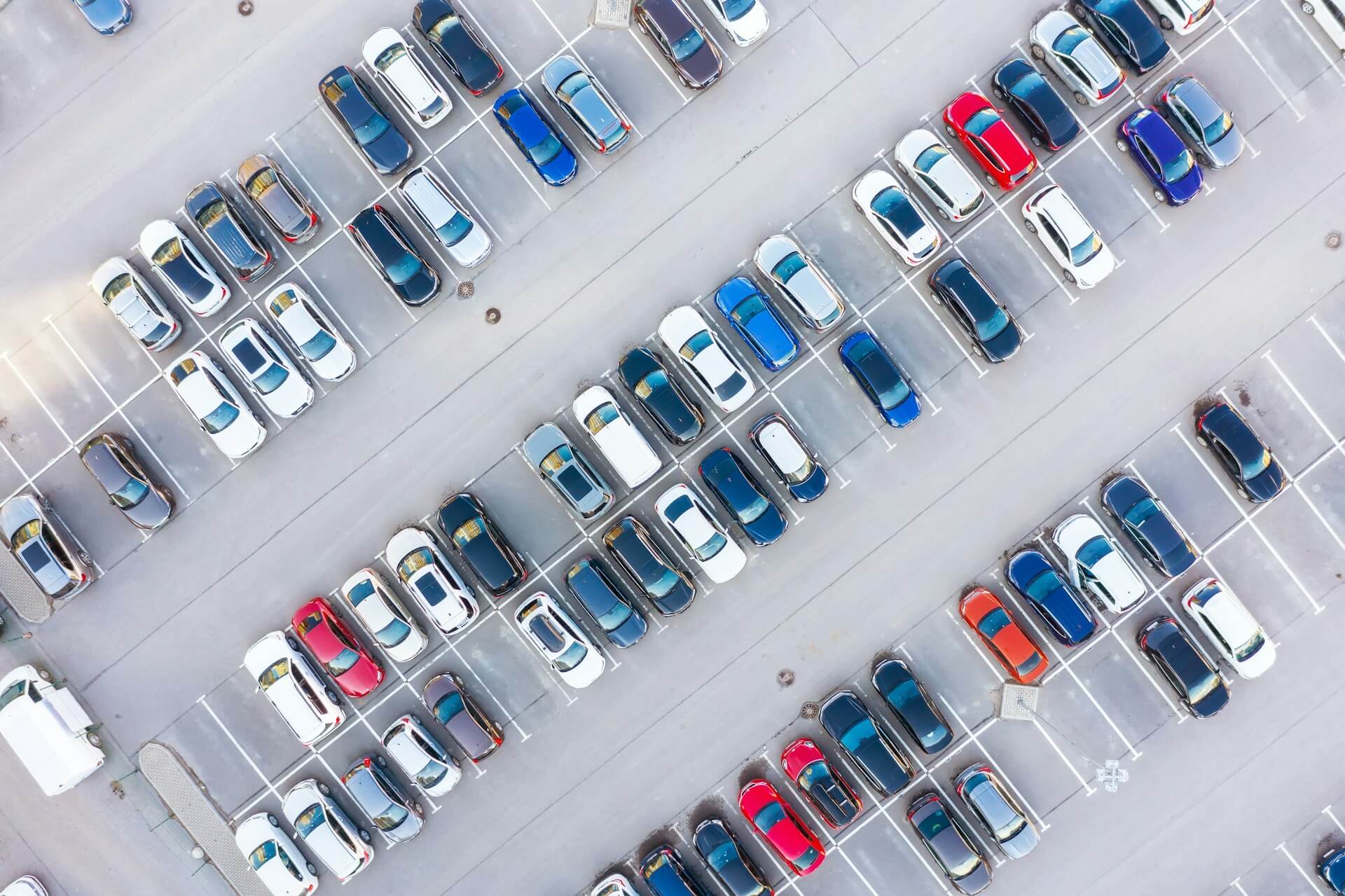
Are colours disappearing from the roads? Instead of the colourful cars of the 1990s, today black, white and grey dominate.
Do colourful cars sell faster than average?
Colourful 1990s
We analysed data from more than 1 million cars checked through the app, by model year and colour.
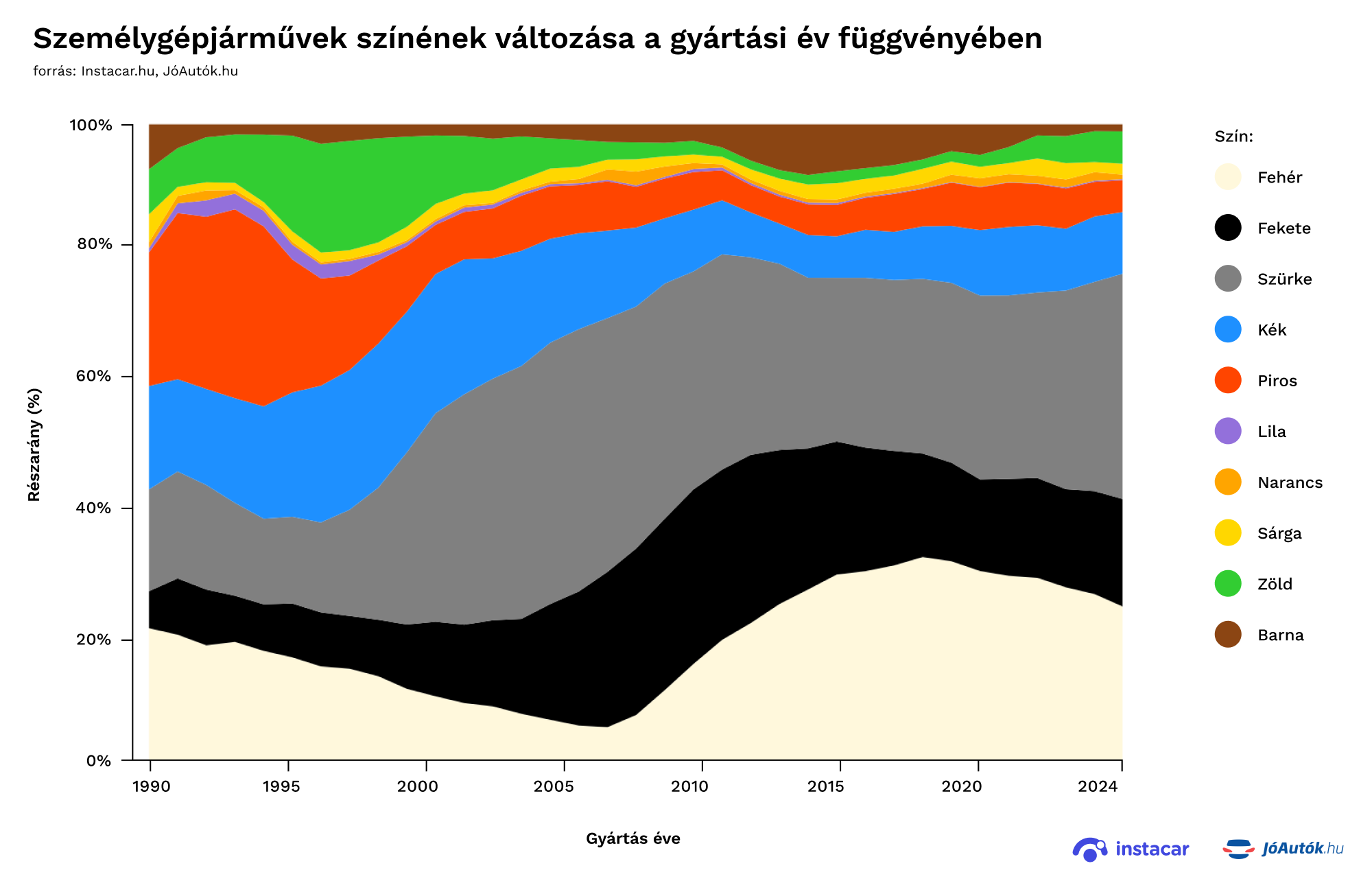
While most cars made in the 1990s (56%) were colourful, in cars produced over the last ten years this ratio has dropped to a fraction.
Half of the cars made in the 1990s were blue (20%), red (16%) or green (14%)—and even purple, which has almost completely disappeared since then, was produced in the thousands.
Now black, white and grey dominate
“The trend has clearly changed a lot over the past decades. In the last ten years, three out of four cars (76%) are black, white or grey, and only one out of four (24%) has a different colour,” said János Pintye, founder of Instacar.
Blue is still popular, although its share has halved compared to the 1990s (9%).
Only about one in twenty cars (6%) gets red paint.
Green, although it’s starting to become popular again, still accounts for only 2%.
One third of cars made in 2024 and checked in the app are grey (34%), a quarter are white (26%), followed by black at 16%.
Almost every tenth car is blue (9%), and every twentieth is red (5%) or green (5%).
Reds and oranges sell faster
Bertalan Halász, CEO of JóAutók.hu—a site offering selected cars that have gone through a 360‑point condition inspection—added:
“Based on listing times, we see that among all cars, the eye‑catching reds and oranges sell the fastest. Greens and yellows may have to wait nearly three months for a buyer. The more restrained black, white, grey and blue colours sit in the middle of the pack in terms of time on market.”